 Mehmet Emin Cengiz
The intermittent cycle of conflict between the Syrian forces and the SDF, which began in the Kurdish-majority neighborhoods of Aleppo on January 6 and subsequently spread east of the Euphrates, reminiscent of the momentum of the 11-day military operation called “Operation Deterrence of Aggression” that effectively overthrew the Assad regime in Syria, seems to be heading towards a resolution period. The SDF’s maximalist approach to implementing the March 10 agreement, its resistance to easing its red lines, and its focus on short-term interests rather than making long-term strategic decisions, driven by the opportunism of the regional political conjuncture, led to a military operation. The inability to resolve the dichotomy between those open to integration within the SDF and those, acting under the shadow of Qandil, who insisted on maximalism stemming from ideological blindness, ultimately led to a serious loss for the SDF.
With the intervention and defection of Arab tribes, the predominantly Arab provinces of Raqqa and Deir ez-Zour, east of the Euphrates, came under Damascus’ control in a short period of time. The SDF withdrew from these areas without putting up a stiff resistance. Furthermore, with a large segment of the Arab tribes breaking away from the SDF, the organization has essentially reverted to its original form, the YPG of 2013-2014. Finally, the Sanadid forces, belonging to the Shammar tribe, a long-time ally of the SDF, also declared their allegiance to Damascus and seized the al-Yarubiyah border crossing.
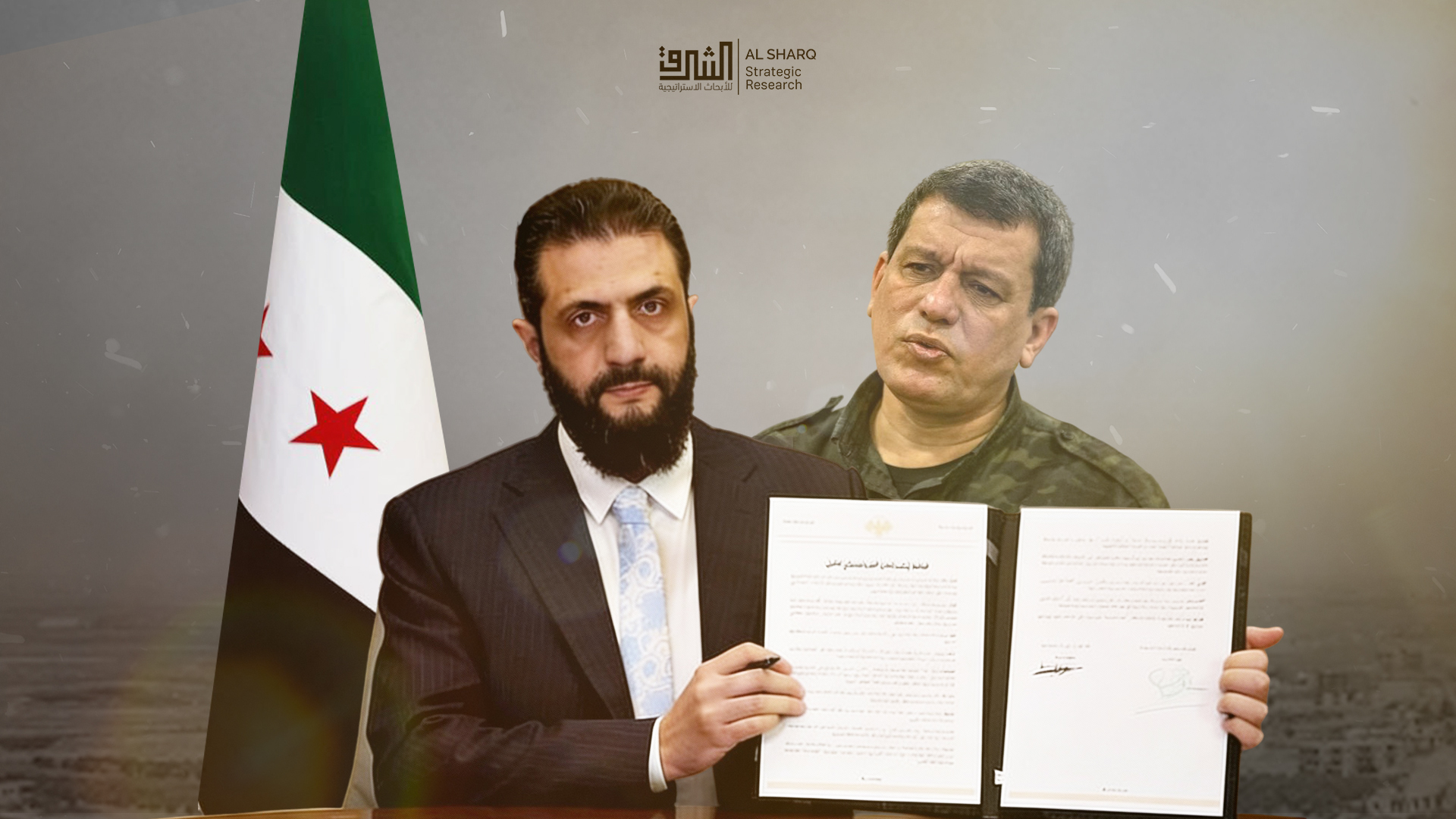
On January 18, a 14-point ceasefire and integration agreement was reached between Syrian President Ahmed al-Sharaa and the SDF Commander Mazloum Abdi. This agreement included key points such as placing Arab-majority areas under Damascus’s military and administrative control, transferring control of borders, dams, oil and gas fields to the central government control, integrating SDF members into the army ‘individually’ and after vetting by Damascus, expelling non-Syrian PKK members from the country, cracking down on the remnants of the former Assad regime in northeastern Syria, granting special status to a region with more sensitive demographic balances like Hasakah governorate, and establishing local police forces in Kurdish-majority cities. However, the following day, Abdi traveled to Damascus to discuss the agreement’s details with al-Sharaa but left the capital without a final agreement. This briefly escalated tensions in northeastern Syria, leading to a general mobilization in areas under SDF control. In addition, the SDF called on Kurds from all over the world to cross borders into Northeast Syria and join the resistance in Kurdish-majority areas. The PKK leaders in Qandil also released videos advising the public to resist. Murat Karayılan, the primary military leader of the PKK, even gave tactical advice to the SDF, suggesting they use tunnels. During this process, the bloody videos from both sides that surfaced on social media created a risk of the situation escalating from a conflict between forces allied with Damascus and the SDF into an ethnic conflict between Arabs and Kurds. In Türkiye, the pro-Kurdish DEM Party marched to the Syrian border in the Nusaybin district of Mardin. A provocation also occurred on the other side of the border, where the Turkish flag was taken down.
On the evening of January 20, the Syrian Presidency announced a new ceasefire. However, this ceasefire did not completely resolve the crisis. At the time of writing, clashes were continuing across various areas between the SDF and forces loyal to Damascus. The new ceasefire agreement granted the SDF an additional 4 days to implement it and submit a detailed integration plan. Furthermore, the agreement pledged that, if implemented, the Damascus forces would not enter the city centers of Hasakah and Qamishli, and that the Syrian army would not be present there. Moreover, the agreement stipulated that Abdi would submit candidates for the positions of Assistant Minister of Defense and Governor of Hasakah, as well as create lists of names for the Syrian parliament and state institutions. Regarding the governor position, it is worth noting that some leaders of the military organizations that overthrew the Assad regime were appointed as governors of different provinces of Syria after December 8, 2024. Therefore, the suggestion shouldn’t be considered strange.
Syrian Presidential Decree No. 13
In addition, Presidential Decree No. 13, containing eight articles and signed by President Ahmed al-Sharaa on January 16, is a document of historical importance. Although it is clear that the document cannot yet be considered a constitutional achievement-Syria does not yet have a constitution, only a constitutional declaration-it broadened the definition of Syrian identity, which is founded on Arab identity.
According to this agreement, the Syrian Kurds are recognized as an integral part of the country, an inseparable part of Syrian national identity, and Kurdish is recognized as a national language within the framework of national sovereignty, with state guarantees for its development. Damascus also accepts the teaching of Kurdish in state and private schools in areas with large Kurdish populations. Nowruz is declared a national holiday. In addition, decisions stemming from the 1962 census are revoked, and Syrian Kurds without identity documents/citizenship are declared citizens of the country. These are undoubtedly significant steps forward. In short, with the decree of January 16th and the agreement of January 18th, the state guarantees the linguistic and cultural rights of Syrian Kurds and establishes a certain degree of administrative power-sharing.
In Syria, with the Damascus growing stronger every day, all Western capitals, especially the US, supporting the new Damascus administration, Ahmed al-Sharaa being received with the highest protocol in global power centers such as the White House, the Kremlin, and the Elysée Palace, and the crippling Caesar sanctions on the country being lifted, the SDF has no choice but to accept Damascus’s integration offer within the extended timeframe. The latest statement by US Special Envoy for Syria Tom Barrack regarding the SDF reiterates that the US has established a temporary, tactical, and security-related relationship with the group based on the fight against ISIS, and that the fight against ISIS will now be entrusted to Damascus, which has officially joined the US-led International Coalition. Barrack’s announcement is almost tantamount to a dissolution of the SDF and the PYD-led Autonomous Administration in North and East Syria. It is clear that the SDF, due to its strategic blindness, is forced to accept less than it could have obtained at a normal negotiating table, as a result of the military and territorial losses it has suffered. The fundamental principles of this new era lie in the desire to weaken non-state armed actors across the region, primarily in Syria, and to support central capitals, with a few exceptions, both regionally and internationally. From Lebanon to Syria and Iraq, from Sudan to Yemen, the main pattern or aim is the weakening and decline of non-state actors, with a few exceptions, and the advancement of central capitals.
Processes that fail to recognize this situation and establish meaningful, integration-based relationships with the center ultimately fail. It is very clear that what is happening in northeastern Syria will also affect the course of the process with the PKK in Türkiye. In 2015, the peace process with the PKK in Türkiye ended largely because of the possibility of the PKK establishing a state(let) in Northern Syria. The PKK basically sacrificed the previous peace process in exchange for the possibility of a state(let) in Syria. Today, the ongoing peace process faces the same threat. If the SDF makes good use of the 4-day deadline given to them by Damascus, agrees to integration, and this process concludes positively, resolving the PKK problem in Türkiye will become easier. The SDF’s resistance to integration and its engagement in a futile resistance narrative would not only throw Syrian Kurds into an uncertain future but also deal a serious blow to the peace process in Ankara. It is now time to establish long-term strategic ties with local actors. The fact that even its closest external allies did not really react when the SDF was subjected to military operations, and that its supporters kicked down the gates of International Coalition bases in Syria in protest, clearly serves as a lesson for everyone.
Finally, at such a sensitive time, those in Turkish and Arab media who are shouting victory slogans and using almost chauvinistic language are both offending Kurds in Türkiye and Syria, strengthening the arguments of anti-integration figures, making integration in Syria more difficult, and harming the peace process in Türkiye. Instead of instilling a sense of defeat in Kurds in both Türkiye and Syria, highlighting the benefits of integration for both sides would be in everyone’s best interest.