
 Mohamad Fawaz
(This text was translated from its original Arabic version.)
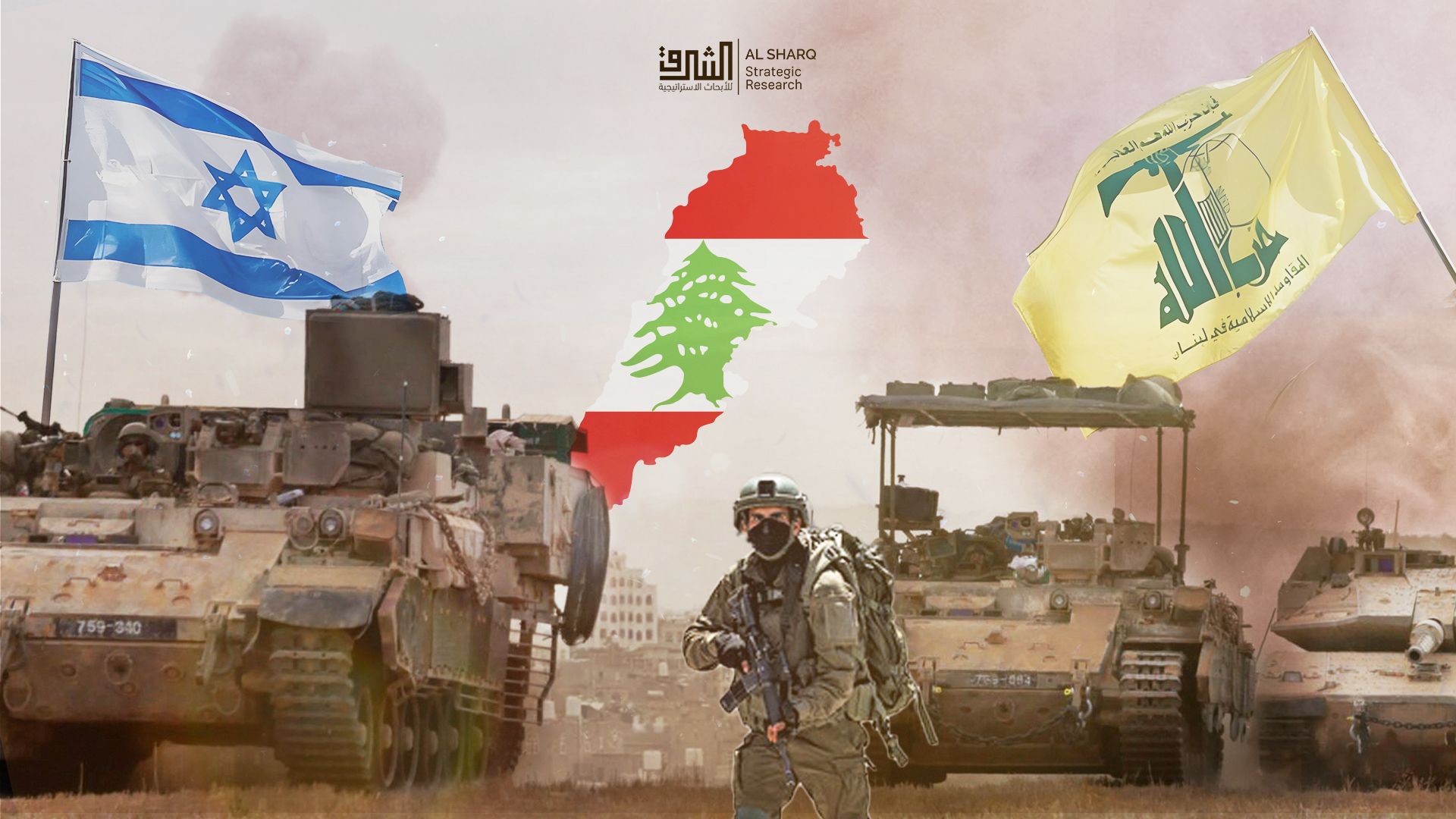
The United States and Israel launched their military campaign against Iran on the morning of February 28 with the assassination of the Supreme Leader of the Islamic Republic, Ali Khamenei, thereby opening a war whose beginning is known, but whose end remains uncertain. Hezbollah did not take long to join the confrontation. Just a day after Iran officially announced the assassination of its Supreme Leader, Hezbollah declared its entry into the conflict by launching a rocket barrage and a wave of drones at the “Mishmar HaCarmel” site south of Haifa. In its statement, Hezbollah framed the operation as an act of “revenge for the blood of Imam Khamenei and in defense of Lebanon.”
Hezbollah’s intervention was not surprising in principle. Hezbollah has long constituted a central extension of Iran’s Islamic Revolution—its most prominent Arab arm and, for years, the overseer of other regional fronts. This is true at the level of ideology, but it also reflects battlefield realities. Hezbollah understands that Iran’s collapse would, in effect, mean its own collapse. The scenario Hezbollah had least wished to contemplate was one in which the Iranian regime falls and Israel is then free to focus entirely on Hezbollah. Moreover, it is increasingly evident that Iran itself has entered an existential phase of war, deploying sensitive strategic cards from the outset. This has been visible in the accelerated targeting of Gulf states, Azerbaijan, and even Türkiye, albeit in limited form in some cases. Hezbollah therefore appears to have viewed this war as existential both for Iran and for itself, leaving it with few options: either intervene at a moment when such intervention might still help Iran, or wait until any move would no longer matter and it would be left to face Israel alone.
Yet Lebanon’s political and social climate was not prepared for Hezbollah’s entry into the war, and in most quarters, there was little appetite for such a move. Since the most recent ceasefire took effect on November 27, 2024, Hezbollah had refrained from escalating into a wider confrontation or responding to the continuing Israeli violations. Israel, for its part, refused to fully abide by the ceasefire unless it was accompanied by the complete and publicly declared disarmament of Hezbollah. As a result, Israeli strikes inside Lebanon continued on a near-daily basis, causing hundreds of deaths during that period.
In addition to Hezbollah’s restraint throughout that phase, a broader atmosphere of reassurance had prevailed between the United States and the Lebanese state regarding Lebanon’s non-involvement in the wider regional war. This atmosphere was also reinforced by messages attributed to Speaker of the Lebanese Parliament Nabih Berri, Hezbollah’s longtime political ally and an important channel for its political signaling. This unprepared domestic climate contributed to hardening positions against Hezbollah, alongside two other factors. The first was timing, which was widely perceived as serving Iranian rather than Lebanese interests, even though Hezbollah Secretary-General Naim Qassem sought to emphasize the Lebanese rather than Iranian character of the move. The second was the severe imbalance of power. A third factor was Hezbollah’s decision to initiate the war on its own, despite its apparent awareness of the limited impact of its operations—especially given that these operations declined strikingly after the opening day.
This is why the broader Lebanese mood turned sharply against Hezbollah and against its decision to open a new war. In response, the Lebanese government moved quickly to adopt an unprecedented decision, declaring an immediate and comprehensive ban on all Hezbollah military and security activities, designating them as illegal, and confining the group’s role to political activity alone. The army and security agencies were tasked with taking all necessary measures to prevent any military operation or the launch of rockets or drones from Lebanese territory, while implementation of a plan to disarm the area north of the Litani River was ordered to begin “immediately and firmly,” using all necessary means, alongside the arrest and prosecution of violators.
In addition to the state’s decision, Nabih Berri’s position stood out. This time, he diverged from Hezbollah’s line, as ministers affiliated with the Amal Movement refrained from objecting to the government’s decision to ban the group’s military activity. This added a new layer of political isolation to Hezbollah within Lebanon.
Even so, Israel paid little attention to the Lebanese state’s move and pressed ahead with a comprehensive military campaign. It began with a wave of strikes across different Lebanese areas, followed by rapid escalatory steps that effectively resumed the confrontation where the 2024 round had ended. Within days, Israel ordered the evacuation of the entire area south of the Litani River—more than 10 percent of Lebanese territory. This was followed by near-total evacuation orders for Beirut’s southern suburbs, home to roughly half a million residents, as well as evacuation orders for entire villages in the Bekaa, alongside the launch of a ground operation in the south.
The sweeping Israeli offensive shattered all previous deterrence formulas, while Hezbollah responded with daily and escalating operations. At the same time, the group has sought to confront Israeli ground advances, inflicting losses on Israeli forces deployed inside Lebanon. This, together with the public appearances and statements of Sheikh Naim Qassem and his deputy Mohamad Raad, suggests that Hezbollah has regained some degree of its security and command cohesion, though without the capacity to match the pace and scale of the war.
Taken together, Israeli actions thus far appear to be unfolding along several tracks. The first is the systematic targeting of Hezbollah’s capabilities, as well as those of affiliated groups in Lebanon, including their facilities and personnel. The second is a ground invasion beginning from southern Lebanon. The third is pressure on the Shiite social base—effectively punishing it for its longstanding support for Hezbollah, while pushing it in specific directions that could deepen Lebanon’s internal social fractures. These tracks appear to serve three principal objectives: first, the military destruction of Hezbollah, or at the very least its social and political breaking; second, the destabilization of Lebanon’s internal civil peace; and third, the acquisition of new Lebanese territory that may not stop at the area south of the Litani, with a view to negotiating over these areas with the Lebanese state in the future and integrating them into Israel’s wider regional project.
For Hezbollah, by contrast, passivity would amount to its end—whether now or within a matter of months. It is therefore continuing to move, seeking to impose a reality of endurance and sustain the battle while awaiting developments in Iran.
The Lebanese state, meanwhile, has found itself in a state of acute paralysis, trying to operate on two tracks at once. The first is to signal that it is now prepared to move quickly toward the full disarmament of Hezbollah. The second is to encourage friendly states, such as France and Egypt, to press for a ceasefire and grant the Lebanese state an additional opportunity to disarm Hezbollah, even if only over the course of one or two months. Leaks suggest that Hezbollah itself has rejected such a scenario, not to mention Israel’s own refusal, as it appears to believe that the current moment offers a rare opportunity to realize its ambitions in Lebanon in what it wants to be the final and decisive battle there.
What appears certain is that Lebanon will not return to the conditions that prevailed during the last ceasefire. Most of the available options are now radical ones, likely to affect Lebanon’s geography as well as, by extension, its demography and its political and social order. Much will depend on developments on the Lebanese battlefield and, no less importantly, on the trajectory of events in Iran.