 Mehmet Alaca
 Bekir Aydogan
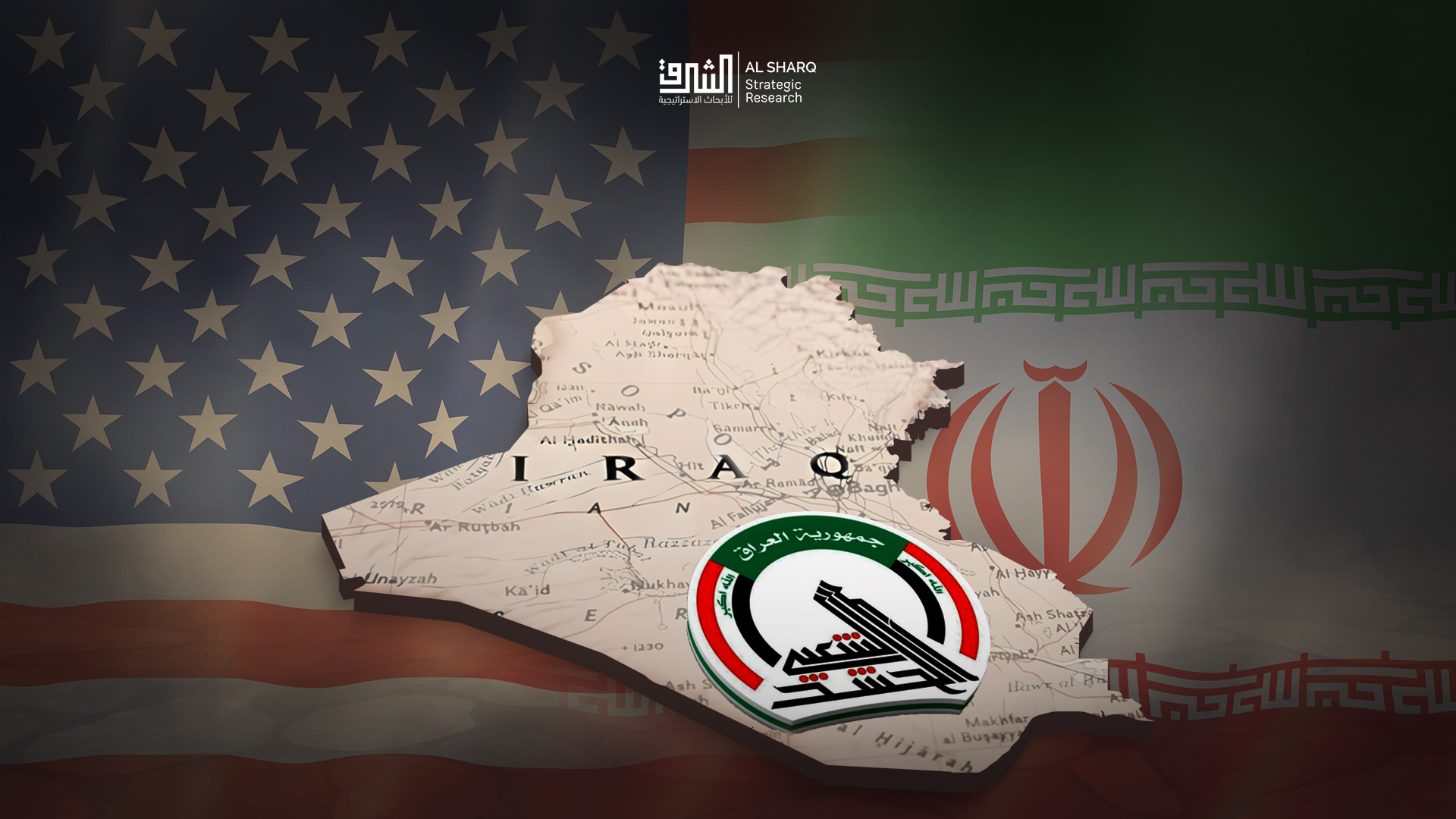
The war initiated by the US and Israel on February 28 has not only engulfed Iran and the immediate theaters of conflict; it has also begun to draw in Iraq, one of the region’s most fragile political systems. In a reality where Iran has horizontally escalated the conflict, extending it toward the Gulf states, Iraq has emerged as an actor targeted by all sides. The country has now become effectively one of the secondary fronts of the conflict. Beyond its geographic location, Iraq stands as a country where the power struggle between Iran and the US is most intensely contested.
For Iraq, therefore, the war represents more than an external crisis; it marks a rupture that is directly reshaping the country’s internal political balances. What the war has once again laid bare for Iraq is a dual imperative: domestically, the need to balance Iran’s dominant influence and bring militia forces under control; externally, the need to pursue an independent Iraqi policy that takes into account the country’s ethnic and sectarian diversity while positioning Iraq as part of the regional order. Any alternative course risks leaving Iraq exposed not only to the direct repercussions of the Washington–Tehran rivalry and Iran-related conflict dynamics, but also to deeper internal fragility and increasing regional isolation.
Shiites Fragmented, Kurds and Sunnis Concerned
Iraq’s position in the war against Iran is highly intricate and uniquely complex. Iran and Iran-backed Iraqi militias are carrying out attacks not only on the US presence in Baghdad but also, particularly in Erbil, across the Kurdistan Region of Iraq (KRI), targeting US/Western interests, Peshmerga bases, and Iranian Kurdish opposition groups. At the same time, these militias attack the Gulf and Syria. The US, in turn, is delivering overwhelming strikes against militia forces inside Iraq. The KRI and Arab states are issuing stern warnings to the Baghdad government, demanding that militia attacks be brought to a halt. Meanwhile, Baghdad-attempting to placate all sides across the US–Iran–KRI–Gulf–militia axis-is steadily losing control, watching as the country is drawn closer to war with each passing day.
The stance of political forces in Iraq toward the war is far from uniform; instead, it shows a highly divided landscape. The war’s immediate impact on Iraq has been to further harden an already fragile political equation. Within Shiite political blocs, the divide is deepening between groups aligned with Iran and actors seeking to pursue a more “Iraq-centered” line. Pro-Iran Shiite factions frame the war as an existential struggle. In particular, the Popular Mobilization Forces (PMF)—the umbrella organization of militias largely dominated by pro-Iran groups—has emerged as one of the most critical actors on the ground, directly bearing the brunt of the conflict due to its organic ties to Tehran. Although the PMF is state-funded and holds legal status, some of its factions have shown a tendency to escalate attacks against U.S. targets, while others adopt a more restrained approach. Despite its formal legal status, the fact that certain PMF-affiliated militias operate beyond state control and carry out attacks further underscores Baghdad’s weakness and deepens its dilemma. By contrast, more pragmatic Shiite actors are developing a discourse that prioritizes staying out of the conflict.
Sunni and Kurdish political actors, for their part, view the crisis as a dangerous threshold, while also tending to interpret it as an opportunity for rebalancing. Some Sunni political elites, while seeking to avoid being drawn directly into the conflict, define the potential weakening of Iranian influence as a strategic opening. Kurdish actors, meanwhile, adopt a cautious and balanced stance due to their close ties with the US/West, as well as their geographic proximity to Iran. Despite their neutrality, they are monitoring the escalating attacks by Iran and militia groups with increasing concern. The prospect of a weakened Iran could give these actors leverage to demand a greater share of power in Baghdad. However, such a shift also carries the risk of further destabilizing Iraq’s already fragile sectarian and ethnic fault lines.
During this process, the US has been conducting strikes aimed at protecting its military presence and bases in Iraq, while also carefully maintaining diplomatic engagement with Baghdad to prevent the country from drifting entirely into a pro-Iran camp. Since the early stages of the war, Washington has targeted key militia headquarters across various parts of the country and has carried out assassinations of hardline figures such as Abu Ali al-Askari of Kataib Hezbollah. This pattern of low-intensity but persistent confrontation is making the tension between the US and the PMF increasingly structural and enduring. It is worth noting that, in the midst of the Iran crisis, NATO announced the withdrawal of all of its missions from Iraq as a temporary measure.
Iraqi Prime Minister Sudani’s Difficult Test
The uncontrollable attacks by Iran-backed militias are not only blurring the lines of the battlefield but also laying the groundwork for political ruptures with potentially lasting consequences along the Erbil–Baghdad–Tehran axis. Since the beginning of the war, nearly 500 attacks have reportedly targeted the KRI. Most recently, a drone strike on the residence of KRI President Nechirvan Barzani in Duhok has opened the door to a new and dangerous threshold, signaling that militia attacks may target anyone. While Iraqi Prime Minister Mohammed Shia al-Sudani’s condemnation of the attack on Barzani’s residence is significant, it is evident that Baghdad’s phone diplomacy and written statements have had no impact on the ground in the face of ongoing militia attacks—both against regional countries and the KRI. This situation points to a substantial loss of control within the government’s security apparatus.
Beyond this, the fact that Saudi Arabia, the UAE, Bahrain, Qatar, Kuwait, and Jordan have collectively called on the Iraqi government to stop the militias attacking on their territories—and to assume responsibility for the actions of Iran-backed groups—constitutes a direct and coordinated message to Baghdad. Militia attacks are increasing the cost and threat to Iraq not only from the perspective of the US and Israel, but also in relation to Arab states. Long caught between Shiite and Arab identity, Iraq now appears unable to manage this tension in the context of the current war and must find a new balance or direction to overcome its impasse. Opting for Iran and joining the “axis of resistance” would narrow Baghdad’s regional influence, lead to its isolation, and widen the gap between political Shiism and Iraqi society. For Iraq, sacrificing regional reality to a single alignment amounts to the death of rationality.
At this very juncture, the Iraqi National Security Council’s decision—following a US strike in Anbar that killed 15 militia members—to grant the PMF and all security forces in the country the authority of “self-defense” against attacks targeting security institutions and personnel reflects the depth of Baghdad’s predicament. Notably, the same statement also condemns militia attacks on diplomatic missions and state institutions. The “right of self-defense,” of course, appears aimed at balancing domestic political pressures. In effect, it opens a legitimate space for the PMF’s “uncontrollability.” While the statement emphasizes that “the decision of war and peace rests with the state,” Iraq is not formally entering the war—yet is, in practice, signaling its inability to restrain militia attacks. At the same time, the absence of any condemnation regarding the killing of six Peshmerga in Iran’s ballistic strikes suggests a careful calibration toward both Tehran and the PMF. The attacks and the militias’ uncontrollability are likely to deepen the crisis of trust between Erbil and Baghdad in the post-war period. Undoubtedly, although PM Sudani attempts to rein in these forces, he remains constrained by internal political balances. The political wings of the PMF have significantly strengthened in recent elections, making it virtually impossible to determine the premiership without them. Having to balance the Iran–US equation, Sudani is reportedly interested in securing a second term as prime minister. However, the increasingly untenable reality of militia reality amid the war, coupled with Iraq’s predicament between two strategic paths, is pushing this ambition onto an increasingly complex and fragile political terrain.
What’s next for Iraq?
Despite the elections held in November 2025, the country has yet to form a government. As it has been the case for years, the government formation process is again becoming chronic political crisis. When combined with the external pressures generated by the war, the situation is giving rise to a serious risk of “statelessness.” The weakening of central authority and the PM’s diminishing effectiveness are enabling armed groups to act with greater autonomy, pushing the country toward an increasingly fragmented security architecture.
In addition to the long-standing, unresolved disputes between Erbil and Baghdad over energy revenues, budget sharing, disputed territories and security, the KRI becoming a regular target of militias and Iran is likely to further deepen the crisis of trust between the two sides. Particularly in the context of the war, the emerging rapprochement between the Kurdistan Democratic Party (KDP) and the Patriotic Union of Kurdistan (PUK) could reinforce internal cohesion in the KRI, as the areas controlled by these rival parties in KRI are also subjected to attacks. In the aftermath of this crisis, the emergence of a stronger and more unified Kurdish bloc would not be surprising. Moreover, alongside US and Iranian strikes in Iraq, the continuation of unilateral militia attacks on the KRI—combined with the Kurdish side’s restraint and decision to avoid escalation while reserving the right to retaliate—carries the risk of evolving into an internal “civil war” dynamic within the country.
Unless the political leadership in Baghdad adopts a clear and concrete position, Iraq’s deeper involvement in the war—through militia channels—will become inevitable, depending on the trajectory of the Iran war. Therefore, unless tensions are contained at a certain level through the actions of the Iraqi government and regional actors, the country faces layered vulnerabilities. Such a scenario would not only draw Iraq more directly into the war and turn it into a battlefield, but also further erode state capacity, producing long-term destabilizing consequences.
On the other hand, the overwhelming majority of Iraq’s economy depends on its daily production of approximately 4 million barrels of oil. The crisis triggered in the Strait of Hormuz—by disrupting energy security and trade routes—has forced new searches for alternatives, leaving Iraq on the verge of being unable to sell its oil. The addition of economic deprivation to the country’s existing security and political fragility would amount to a worst-case scenario. Failure to bring militias under control, or a full-scale engagement in the war, could drag the country into collapse. In this context, the importance of alternative corridors—such as the Development Road Project between Türkiye and Iraq, envisioned as a key economic and energy route—becomes increasingly evident. Rising risks in Hormuz make it more urgent for Iraq to establish diversified trade and energy routes through Türkiye. For Ankara, this process presents a significant opportunity to deepen economic and strategic integration with Iraq. A positive step was taken in this regard following the outbreak of the war in Iran. In mid-March, Iraq announced the resumption of its oil exports through Türkiye’s Ceyhan port after three years of halt due to a previous legal case.
In conclusion, the war represents not only an external crisis for Iraq, but also a critical test of its internal political structure, security architecture, and regional positioning. This process will either drive Iraq toward deeper fragmentation and regional isolation, or it will open the door to a new internal political settlement through a necessary rebalancing. However, the current trajectory points less to the latter scenario and more to a deepening of fragility. How Iraq emerges from this storm will depend not only on political actors in Baghdad, but also on regional powers and broader global dynamics. Yet first and foremost, Baghdad must clarify where it stands.